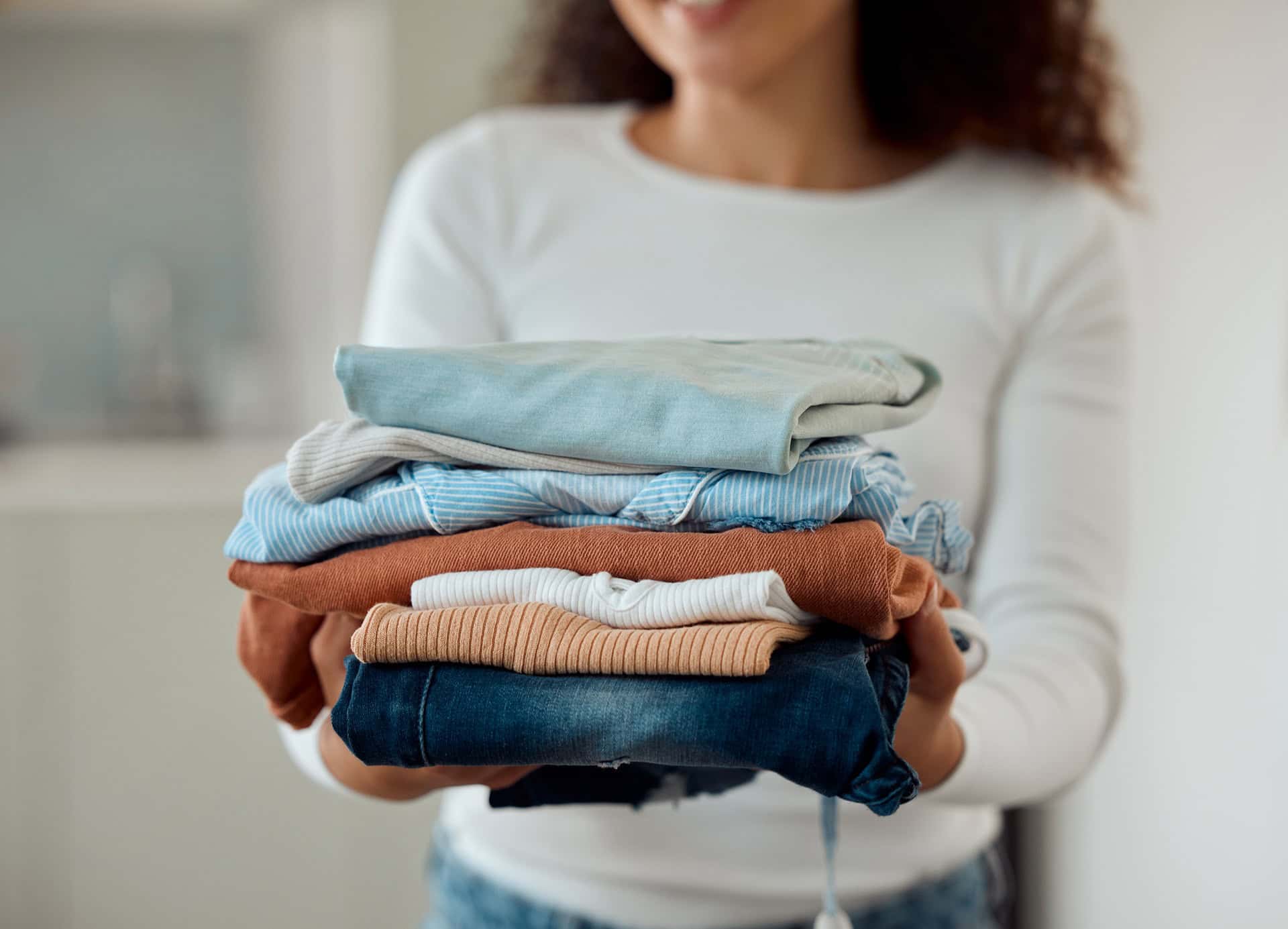

The cycle isn't where clothes get damaged. The setting is. Choosing warm when the load needs cold fades dark colors after a few months. Choosing hot when the load needs warm shrinks the shirts that fit perfectly. Choosing cold when something needs actual sanitizing leaves the problem in the fabric.
The washing machine does exactly what you tell it; the damage is in the instruction, not the machine. This guide gives a direct answer by load, so the right setting is the one decision you don't have to guess.
Whites and Light Colors: Warm or Hot
Verdict: warm for regular wear, hot for anything stained or heavily worn.
Warm water handles everyday whites – undershirts, socks, light button-downs – without breaking down elastic or fading trim. Hot water earns its place for visible stains, heavy body soil, or clothes worn for physical work. It lifts oils and proteins that warm water leaves behind, and keeps whites from turning gray from repeated underwashing.
How to Tell If Warm Is Enough vs When You Need Hot
Run through this list before you set the dial:
- Visible stains or yellowing at collars and underarms? Go hot.
- Just regular wear, no stains? Warm enough.
- Load includes anything with elastic (waistbands, sports bras)? Cap it at warm; hot degrades elastic fast.
- Whites you’re trying to restore, not just maintain? Hot, paired with a proper oxygen-based whitener.
The Exception When Whites Include Silk, Wool, or Elastic Blends
Verdict: pull them out and wash cold, separately.
A white load isn’t automatically a safe load. Silk camisoles, wool-blend cardigans, and high-spandex pieces don’t belong near warm or hot water, no matter the color. Heat breaks down protein fibers in silk and wool, and accelerates stretch loss in elastic blends. Sorting by color alone is what ruins a favorite piece; sorting by fabric first is what protects it.
Quick Fabric Check Before You Hit Start
Before you toss a white item into a warm or hot load, check for:
- A care tag listing silk, wool, or “hand wash”
- Lace trim or delicate seams
- Waistbands, sports bras, or shapewear with heavy elastic content
- Any item you’d be upset to see shrink or lose shape
If it checks any of those boxes, set it aside for a cold, gentle cycle instead.
Dark Colors and Denim: Always Cold
Verdict: cold, no exceptions worth making.
Dark colors and denim lose dye fastest in hot water, and the loss happens in noticeable jumps, not gradually. Cold water keeps dye molecules locked into the fabric and keeps denim from shrinking or losing its fit. Cold cleans dark fabrics just as well as warmer settings, since everyday darks rarely carry enough soil to need extra heat.
Why Cold Water Protects Dye and Fit
Two separate things happen when denim and dark colors hit hot water, and both work against you:
- Dye bleeds faster, which is why dark towels turn gray jeans dingy after a few hot washes together.
- Fibers contract, which is why a well-fitting pair of jeans can come out a size tighter after one hot cycle.
Cold water sidesteps both problems at once.
Towels, Sheets, and Bath Linens: Warm to Hot
Verdict: warm for a normal weekly wash, hot every few weeks or when mildew smell shows up.
Towels and sheets sit damp for hours between washes, which makes them a prime spot for bacteria and mildew to build up. Warm water keeps them clean enough for routine use, but bumping to hot periodically clears out buildup that warm water alone won’t touch. The trade-off is durability: hot water breaks down cotton fibers faster over time, so hot doesn’t need to be the default, just the occasional reset.
How Often You Actually Need the Hot Setting
A simple rhythm that works for most households:
- Weekly wash: warm water is sufficient for towels and sheets in regular rotation.
- Every 3 to 4 weeks: run one hot wash to clear mildew-causing bacteria that warm water leaves behind.
- Musty smell after drying? That’s your sign to move to hot immediately, not wait for the schedule.
Bedding After Illness or Kitchen Linens After Raw-Food Contact: Hot
Verdict: hot, every time, no shortcuts.
This is the one category where hot water isn’t a preference; it’s the setting that does actual sanitization work. Public health guidance on laundering after illness consistently points to hot water as the temperature needed to reduce virus and bacteria survival on fabric. The same logic applies to dish towels or cutting boards’ companion linens that touch raw chicken or eggs. Warm water won’t get this job done, even if the fabric could technically tolerate it.
What Temperature Alone Won’t Fix
Hot water is necessary here, but it isn’t the whole solution:
- Wash separately from the rest of the household’s laundry during active illness.
- Use a full detergent dose, not a light one, since these loads carry a heavier bioload.
- Dry on high heat immediately after; don’t let sanitized linens sit damp in the machine.
- Wash your hands after handling the load, before it goes in and after it comes out.
Workout and Athletic Wear: Cold
Verdict: cold, and this one surprises people.
It feels counterintuitive to wash sweaty gym clothes in cold water, but warm and hot actually make odor worse over time, not better. The synthetic fibers in most athletic wear (polyester and nylon blends) trap bacteria and body oil in ways cotton doesn’t, and heat sets that bacteria into the fabric instead of releasing it. Cold water paired with the right detergent breaks down odor-causing residue without baking it in.
The Odor Trap Warm Water Sets
Synthetic performance fabric has a slightly oily surface that attracts and holds bacterial residue. Warm water opens the fiber just enough to let that residue settle deeper, so each wash has more buildup to fight. That’s why gym clothes turn sour after a few weeks even with regular washing: the temperature has been working against you the whole time.
Why Warm Water Ruins the Moisture-Wicking Layer on Performance Fabrics
Verdict: cold protects the fabric’s function, not just its color.
Moisture-wicking fabric works because of a coating applied during manufacturing, and heat is one of the fastest ways to strip that coating. Once it’s gone, the shirt still looks fine, but it stops pulling sweat away from skin the way it did when new. Warm and hot water both accelerate this breakdown, along with high-heat drying, which is often the bigger culprit people overlook.
What to Do Instead If Sweat Smell Lingers
If cold water washes still aren’t cutting through odor:
- Pre-soak in cold water with a small amount of white vinegar for 15 to 20 minutes before the regular cycle.
- Skip fabric softener on athletic wear entirely; it coats fibers and blocks the wicking effect further.
- Air dry instead of tumble drying; heat from the dryer does as much damage as heat from the wash.
Baby Clothes, Cloth Diapers, and Sensitive-Skin Loads: Warm With a Second Rinse
Verdict: warm water, plus a second rinse cycle for anything touching sensitive skin.
Baby clothes and cloth diapers need enough heat to break down waste and residue, but not so much that it sets detergent into fabric that sits against skin all day. Warm water strikes that balance. The second rinse matters more here than in almost any other load: it clears out detergent residue that can trigger rashes on skin that hasn’t built up tolerance yet.
Setting Up the Second Rinse on Your Machine
Most machines make this easy once you know where to look:
- Select the “extra rinse” or “second rinse” option before starting the cycle; most standard washers have this built in.
- If your machine doesn’t have that option, run a short rinse-and-spin cycle manually after the main wash finishes.
- Use half the recommended detergent dose for baby loads to begin with; less residue means less rinsing needed overall.
Delicates: Silk, Cashmere, Fine Wool, Lace: Cold, Always
Verdict: cold water, gentle cycle, no exceptions.
Delicates don’t have a warm-water use case like whites or towels. Each fabric type fails in a specific way under heat.
Wool felts permanently under heat and agitation, becoming a dense, smaller version of itself with no recovery. Cashmere felts faster than standard wool because its fibers are finer. Silk loses tensile strength when wet and develops permanent water-mark rings as moisture evaporates unevenly. Lace tears at attachment points under agitation. Cold water on a gentle cycle avoids all four failure modes simultaneously.
The American Cleaning Institute confirms modern cold-water enzyme detergents close most of the cleaning gap with warm water, so washing delicates in cold is not a compromise. It’s the right setting for the right reason.
The One Setting That Matters More Than Temperature
For delicates, cycle speed matters as much as water temperature:
- Use the gentle or delicate cycle, which spins more slowly and agitates less, regardless of the temperature you select.
- A mesh laundry bag protects lace and fine knits from snagging on zippers or hooks in the same load.
- Skip the dryer entirely for this category; lay flat to dry instead, since dryer heat undoes the benefit of washing cold in the first place.
Mixed Everyday Loads: Cold Is the Safe Default
Verdict: when in doubt, cold.
Most households end up with mixed loads more than perfectly sorted: a work shirt, socks, children’s school clothes, all in one basket. Cold water is the safest default here since it won’t actively damage any fabric type in the mix, even if it’s not optimal for every single piece. Modern detergents clean effectively in cold water, so defaulting to cold costs you little to no cleaning power.
When It’s Worth Splitting the Load Instead
Cold is the default, not the only answer. Split the load if:
- The mix includes both heavily soiled items and delicates, since one setting can’t serve both well.
- You’re washing dark and light colors together and can’t separate them any other way.
- One item in the pile genuinely needs hot water: illness linens or heavily stained whites deserve their own cycle.
The Fast Rule When You Don’t Have Time to Look It Up
Verdict: cold by default, hot only for stains, illness, or sanitization.
If you remember nothing else: cold water is right more often than it’s wrong. It protects color, fabric structure, and elastic, and cleans effectively for most everyday loads. Reach for warmth only when a load specifically calls for it: whites in regular rotation, towels needing a refresh. Reach for hot only when something needs actual sanitization, not just cleaning.
A One-Line Rule to Keep Near Your Machine
Tape this to your laundry room door if it helps: “Cold unless it’s sick, stained, or white and dirty, then go up one setting.” It won’t cover every edge case, but it gets the everyday decision right almost every time.
Skip the Sorting – Julian’s Dry Cleaners Gets Every Fabric Right, Every Time
Reading a chart is one thing. Actually sorting five loads by temperature every week is another. If you’d rather skip that step entirely, our Wash and Fold Laundry Service in Brighton is built for exactly that.
Upgrade your laundry routine with Julian's Dry Cleaners. Every load receives the correct temperature automatically – hot for towels and illness loads, cold for darks and delicates – so there's no dial to second-guess. Send us your entire pile, from work clothes and uniforms to weekend favorites, and we'll return it sorted, clean, and handled right the first time.
Schedule a FREE Pickup and Delivery Service and get back your time this week.