

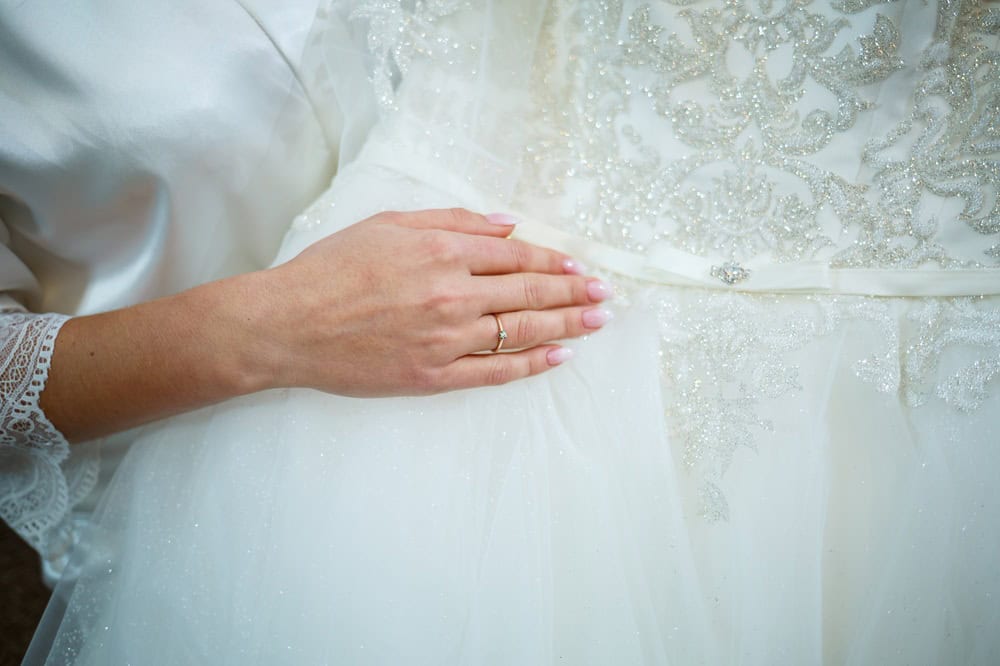
If your wedding dress looks spotless, neatly stored, and has no traces of visible stains, it’s reasonable to believe it’s safe. There’s no reason to think it would look any different when you open the box years from now.
Yet yellowing can occur even when a dress appears completely clean at the time of storage. Small traces of perspiration, sugar, or body oils can remain embedded in the fibers and gradually react with air. It’s a slow process that unfolds quietly.
To help prevent that moment of surprise, let’s unfold in this post what may linger after the celebration, how oxidation contributes to yellowing, which sections of a dress are most susceptible, and what you can do right away to preserve your dress properly.
Invisible Residue Left Behind After the Wedding
With all the hugs, tears, photos, and time on the dance floor, your dress goes through a lot, often without you even seeing it happen. A lot of it dries clear and looks harmless, yet just because you can’t see it doesn’t mean it isn’t there.
Sugar-Based Stains
Wedding receptions are full of sugary drinks and desserts. Champagne, white wine, frosting, cake filling, and even a splash of clear soda all contain sugars. When these liquids dry, they often leave no visible trace, yet they bond with fabric fibers. As months pass, those sugar molecules react with air and begin to darken. What started as a clear spill slowly turns yellow or even light brown.
This is one of the top reasons why many wedding dresses turn yellow. The stain was always there; it just needed time to show up.
Clear Beverages
Many brides often worry about red wine. Ironically, clear beverages cause more long-term damage. White wine, vodka sodas, sparkling water, and even plain water from melting ice can leave behind mineral deposits and sugars.
Because they dry without color, you don’t rush to treat them and just assume the dress is fine. If the bodice starts to shift in color months later, it could trace back to that tiny, unnoticed spill.
Body Oils
Body oils are especially problematic because they sink deep into delicate fabrics such as silk, satin, and lace. They cling to fibers in areas where your skin makes direct contact. Over time, those oils oxidize, creating yellow patches.
This is why professional Wedding Dress Cleaning and Preservation Service always includes targeted treatment around high-contact areas.
Deodorant
Deodorant buildup is subtle. It often mixes with perspiration and body oils, creating a chemical blend that sits in the underarm area. At first, it looks clean, but deodorant contains aluminum compounds and other ingredients that can react with fabric.
When the dress is packed away without being cleaned correctly, the leftover residue can darken over time, and the staining you see later is simply the result of that delay.
Oxidation: The Slow Chemical Reaction That Causes Yellowing
Oxidation is the process by which certain substances react with oxygen in the air. It’s the same reason a sliced apple turns brown if you leave it out.
Once exposed to air, leftover buildup in the fabric begins a slow transformation, and the signs usually appear much later.
Oxygen Exposure
Even inside a garment bag or closet, your dress is exposed to air. Oxygen molecules interact with the invisible residues left in the fabric. When that happens, the chemical structure of those residues changes.
As the residue changes, it darkens, and that darkening is what turns into visible yellowing. It’s not mold. It’s not necessarily dirt. It’s chemistry happening slowly over time.
Time and Storage Conditions
The longer the residue sits, the more chance oxidation has to work, and heat, humidity, or stale air only make it happen faster. Store it near a bathroom, in an attic, a basement, or inside plastic, and you create conditions where yellowing can thrive. Yellowing later on is a slow reaction that began much earlier.
Why It Shows Up Later
Have you also thought, “It looked fine when I stored it.” And that’s true – at the time, the chemical reaction hadn’t progressed far enough to be visible. Oxidation is subtle and steady, and when it finally shows, it’s been building up for quite some time.
Timing is everything when it comes to preserving your dress, because the goal is to remove unseen buildup before oxidation has a chance to set in.
Areas of the Dress Most at Risk
Not every part of your dress carries the same level of risk. Some areas absorb more contact, more moisture, and more exposure than others. These sections are usually the first to show yellowing.
If you’re checking a stored wedding dress, start here:
Underarms
The underarm area absorbs sweat, deodorant, and body oils. Even minimal perspiration can leave residue in this section. Because it’s close to the skin and often made of delicate lining material, discoloration tends to show here first. Yellow shadows in this area are extremely common.
Neckline
Your neckline touches your skin, foundation, setting spray, and perfume. During hugs, it may also brush against other people’s makeup or cologne. That combination of cosmetic residue and natural oils makes this area vulnerable. If yellowing appears along the collar or straps, oxidation of these residues is often the cause.
Hemline
You lifted your train, but the hem still likely brushed against floors, grass, pavement, or dance surfaces. Dust, dirt, and moisture collect here. It may look clean after wiping it, but small bits of residue can remain in the fabric and gradually darken over time.
Interior Lining
You often check the outer fabric but forget the lining, which was in contact with your body the entire time. It absorbs heat, moisture, and oils more than the outer layers. When yellowing appears on the inside first, it’s often from untreated body contact.
Fold Lines
If a dress is folded improperly for storage, creases can become stress points. Residue settles into those folds. As oxidation progresses, yellow lines may appear exactly where the fabric was creased.
What Brides Should Do Immediately After the Wedding
Here’s the part that truly protects your dress: the steps you take in the first few weeks make all the difference. Waiting gives oxidation more time to develop.
If you want to prevent yellowing, consider doing the following:
1. Schedule Professional Cleaning
Don’t rely on appearance, because even if the dress looks flawless, assume invisible residue is present.
A professional wedding dress preservation specialist will inspect the dress under proper lighting and treat hidden stains before they set.
2. Avoid Hanging It in Plastic
Plastic garment bags trap moisture and restrict airflow. Some plastics can even release chemicals over time.
Instead of hanging it in a closet for months, move quickly toward proper preservation.
3. Don’t Delay
The longer you wait, the more oxidation progresses. Ideally, schedule cleaning within a few weeks of the wedding.
When you act early, you dramatically cut down the chances of yellowing.
4. Choose Preservation Over Standard Cleaning
Standard cleaning removes stains; preservation protects the entire dress for the future. Preservation includes detailed stain treatment, fabric-safe cleaning, acid-free tissue wrapping, and storage in archival-quality materials. It’s designed specifically to prevent long-term discoloration.
If you plan to keep your dress as a keepsake or pass it down one day, preservation is the safer route.
When It Comes to Wedding Dress Preservation, Trust the Experts at Julian’s Dry Cleaners
By the time yellowing appears, the damage has already been developing beneath the surface of your dress, so preserving its brilliance now is the key to preserving it forever.
At Julian’s Dry Cleaners, our professional Wedding Dress Cleaning and Preservation Service goes far beyond standard cleaning. We’re a third-generation Rochester team that has been protecting bridal dresses since the 1940s. We carefully inspect, treat, and preserve every inch of your dress using advanced archival techniques to safeguard delicate fabrics, lace, and beading for decades.
Since your wedding dress was the centerpiece of one of the most meaningful days of your life, how you care for it now determines whether it remains bright and beautiful or gradually changes over time.
Don’t wait until discoloration appears. Call us today or visit us to schedule your professional preservation service.
Online Scheduling: https://juliansdrycleaners.com/smrt-signup/
Location: 1964 East Ridge Road, Rochester, NY, 14622
Phone: (585) 584-6839