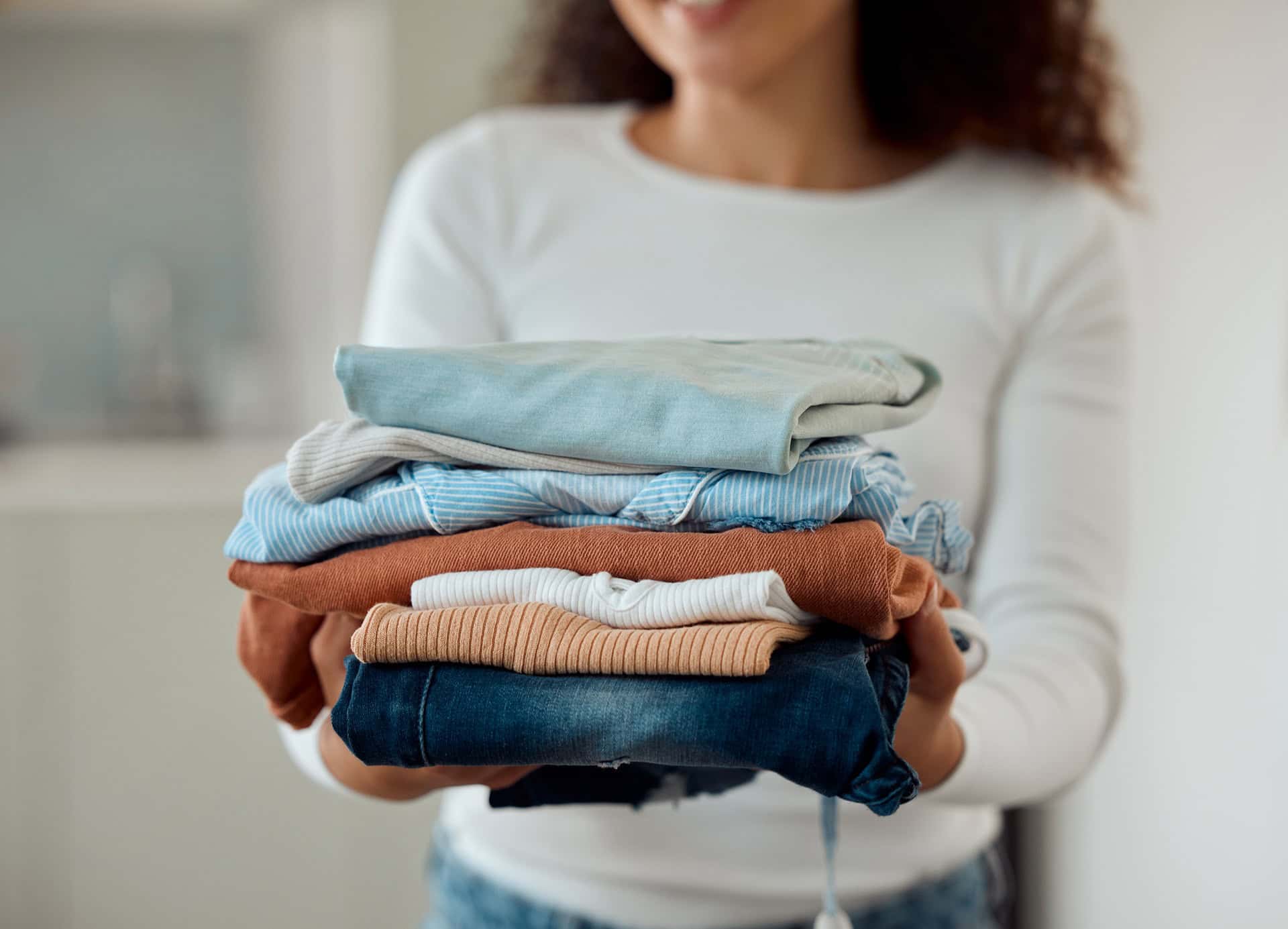

Dry cleaning prices work differently from wash and fold, which is priced by the pound. Every garment gets evaluated on its own before a cleaner decides how to process it. That is why two items dropped off together can come back with very different prices, even if they seem comparable at first glance.
That difference is not random. Behind each price is a quick but careful assessment of what the garment actually needs. Cleaners pay attention to the following.
1 of 7 | Fabric Type and How It Reacts to Cleaning
A professional cleaner looks at the fabric first, and it shapes every decision that follows. Some materials handle solvents and machine movement without issue. Others need a far gentler approach from start to finish.
Fabrics that typically require extra attention:
- Silk: Sensitive to heat; requires mild solvents and slower cleaning cycles to protect the fibers.
- Wool: Can shrink or pill with heavy agitation; needs controlled temperatures and careful finishing.
- Velvet: Pile can flatten easily; cleaners use specialized techniques to preserve its texture.
- Linen: Durable but prone to deep wrinkling; usually needs careful pressing after cleaning.
When the material gets more delicate, the process requires more precision. That precision takes time, which is reflected in the price.
2 of 7 | Garment Structure and Internal Construction
A garment that looks simple on the outside can be surprisingly complex underneath. Linings, padding, interfacing, and internal canvas panels all work together to hold the shape of a garment. Every one of those layers has to come through the cleaning process intact.
Structured garments to which cleaners pay special attention:
- Blazers and suit jackets: Often include shoulder pads, canvas interlining, and multiple fabric layers that must stay aligned.
- Tailored coats: Designed with structural panels that give the coat its silhouette.
- Lined skirts or dresses: Inner linings may react differently than the outer fabric during cleaning.
Garments with more internal construction need extra precision at every stage, and that shows up in the final price.
3 of 7 | Decorative Details Such as Beading, Sequins, or Embroidery
Before a piece with decorative details enters a machine, a professional has to inspect every section closely and decide exactly how to protect it. That inspection takes real time. So does the follow-up check after cleaning to confirm nothing shifted, loosened, or faded during the process.
Details that often require special handling include:
- Beading: Small beads can crack or detach with strong solvents or heavy agitation.
- Sequins: May warp or melt under excessive heat.
- Embroidery: Thread dyes can bleed if the wrong cleaning solution is used.
- Applique or lace: These delicate elements often need extra protection or covering during cleaning.
The additional inspection, careful handling, and finishing time are all reflected in the dry cleaning price.
4 of 7 | Stains That Require Individual Spot Treatment
Some garments have stains that need to be treated individually before the piece goes anywhere near a machine. This step is called pre-spotting, and it is where experience matters most.
Oil-based stains, red wine, makeup, and food residue each respond to different removal agents. Using the wrong product does not just fail to remove the stain. It can push it deeper into the fibers or damage the fabric underneath.
A trained cleaner identifies the stain type first, then chooses the right treatment and gives it time to work.
Stains that often require targeted pretreatment include:
- Oil or grease from food, lotions, or cosmetics
- Wine or coffee spills that sink deep into fabric fibers
- Makeup stains such as foundation, concealer, or lipstick
- Food residue that can cause both staining and lingering odors
The extra time, the specialized products, and the expertise required to treat stains correctly are part of why stain work adds to the final cost.
5 of 7 | Hand Finishing and Pressing Requirements
Cleaning is only half the job. Once a garment comes out of the machine, it still needs to be pressed and finished so it looks sharp and ready to wear. Many pieces can go through a commercial press. Others cannot.
Garments that often require hand finishing are:
- Pleated skirts or dresses: Each pleat has to be set one by one.
- Structured jackets: Lapels and shoulders need precise shaping that machines cannot replicate.
- Delicate eveningwear: Fine fabrics cannot handle the pressure or heat of commercial pressing equipment.
Hand finishing takes longer and requires a higher level of skill. That time and craft factor directly into the price.
6 of 7 | Size and Fabric Volume of the Garment
A long wool overcoat and a wool blazer are both wool, but they are not remotely the same job. Larger garments require more solvent, more machine space, and more finishing time. A floor-length gown with yards of fabric takes significantly longer to press than a knee-length dress made from the same material.
Volume also affects how a garment moves during cleaning. Bulkier pieces need room to move freely so the fabric gets cleaned evenly throughout.
Garments where size affects pricing:
- Long winter coats: Thick materials and full-length designs require more machine space and cleaning solvent.
- Floor-length gowns: Extra fabric means longer cleaning and significantly more finishing time.
- Heavy wool overcoats: Dense fabric requires careful, thorough cleaning and pressing throughout.
- Layered formalwear: Multiple layers increase both cleaning time and the effort required to finish properly.
More material means more of everything. The size and volume of a garment have a direct impact on what the job actually costs.
7 of 7 | Specialty Garments That Require Extra Inspection
Wedding dresses, formalwear, designer pieces, and heirloom garments all go through a more thorough process than everyday clothing. The moment one of these pieces arrives, a professional cleaner inspects it carefully before deciding how to proceed.
Loose embellishments, fragile stitching, hidden stains, and fabric sections that might react poorly to solvents all get flagged at this stage. That same inspection happens again after cleaning. The expertise and time required for that level of care show up in the price.
What cleaners look for during pre-cleaning inspection:
- Loose embellishments or delicate trim that could detach during cleaning
- Weak seams or fragile stitching that may need gentle handling
- Hidden stains or discoloration that require pretreatment
- Fabric sections that may react differently to cleaning solvents
Get Transparent Pricing and Expert Care at Julian's Dry Cleaners
The best garment care goes beyond cleaning. It protects the fabrics, structure, and details that make your favorite pieces worth wearing again. Julian's Dry Cleaners has been trusted by families in Rochester, New York for generations, delivering consistent care and results to which people confidently return.
Our certified garment care experts use advanced equipment and eco-friendly cleaning solutions to give every piece the attention it deserves. Whether you are dealing with a stubborn stain, a delicate fabric, or a garment with real sentimental value, we take the time to handle each with care.
Stop by one of our Rochester locations or give us a call. We are happy to walk you through exactly what your garment needs before we get started.
Online Scheduling: https://juliansdrycleaners.com/smrt-signup/
Location: 1964 East Ridge Road, Rochester, NY, 14622
Phone: (585) 584-6839
Email: info@juliansdrycleaners.com